How to Create Posthumous Messages for Loved Ones
A practical, step-by-step guide to creating posthumous messages for family. Learn what to include, when to deliver, and how to use time-locked capsules and voice recordings.
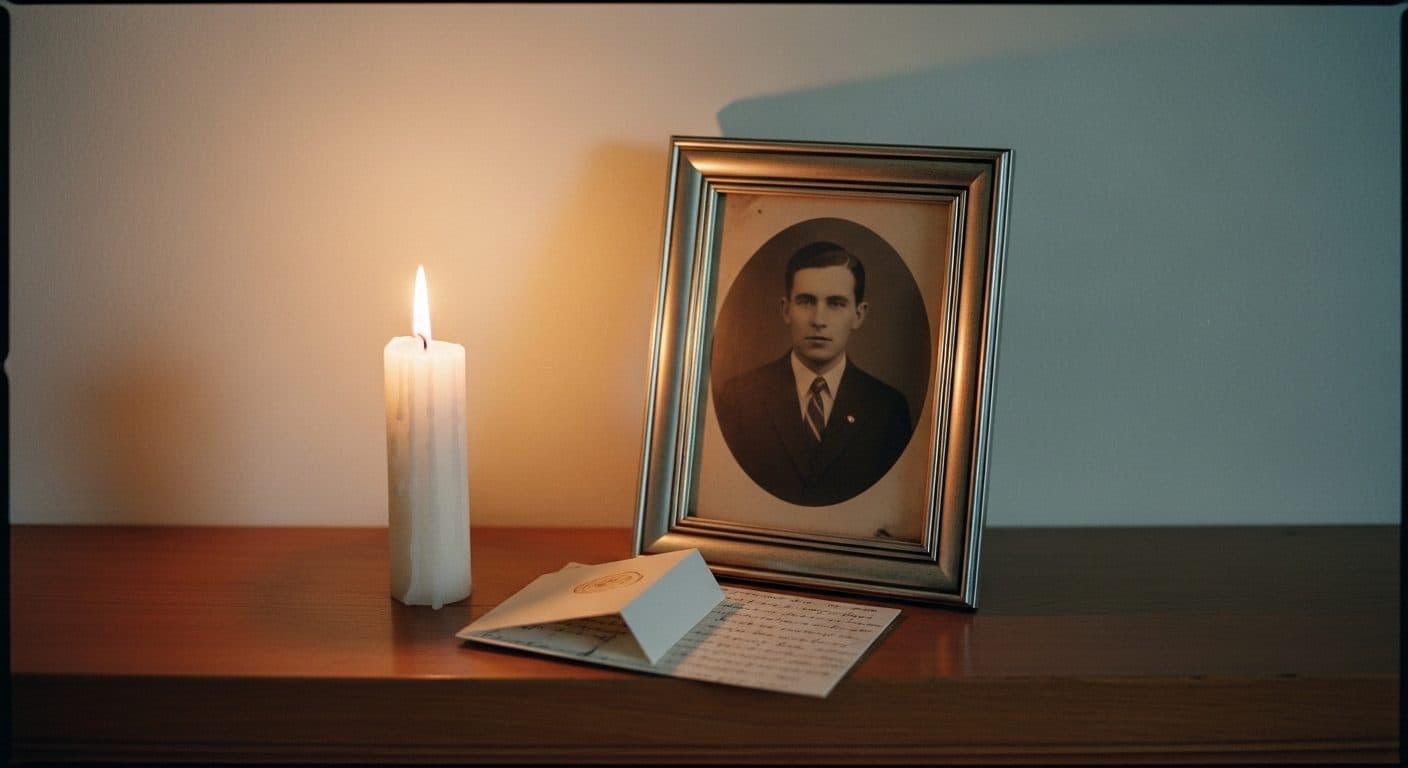
A friend of mine kept meaning to tell his daughter the real story behind the necklace she'd inherit. He never got the chance. There are sentences like that in every family: too heavy for a Tuesday dinner, too important to lose, and tied to a moment that hasn't arrived yet. The day she turns eighteen. The morning of her wedding. The afternoon she has a child of her own.
Creating posthumous messages isn't about death. It's about making sure the words you most want your family to hear aren't lost to the randomness of when and how we leave. You decide what gets said, and you decide when it lands.
This guide walks you through the entire process: why to do it, what to include, how to choose the right moments for delivery, and the practical step-by-step of creating messages that will carry your voice forward.
Why Create Posthumous Messages
Because Words Left Unsaid Are the Deepest Regret
In hospice research, one of the most consistent findings is that the dying regret the things they didn't say far more than the things they did. "I wish I had told them how proud I am." "I wish I had explained why I made that decision." "I wish they knew how much they meant to me." Posthumous messages are insurance against this regret. They ensure that the most important things are said, even if you don't get the chance to say them in person.
Because Your Family Will Need Your Voice
Grief is not a single event. It resurfaces at every milestone, every holiday, every moment when your absence is felt most acutely. A birthday without you. A wedding without you. A grandchild you'll never hold. Posthumous messages provide your family with your actual voice, your actual words, at exactly the moments when they'll need them most. This isn't a substitute for your presence. It's the next best thing.
Because Memory Is Fragile
Within a generation, the specific sound of your voice, your particular way of telling a story, your specific advice about specific situations, will fade from your family's memory. Posthumous messages preserve these with full fidelity. Your great-grandchildren can hear you speak. Your grandchildren can read your advice in your own words. Your children can feel your presence decades after you're gone. Anyone who has tried to trace a family tree knows the gap this fills: genealogy hands you a name and two dates, but rarely the person. If you have ever wondered who your ancestors really were, this is how you keep your descendants from having to wonder the same about you.
Because It Brings Peace Now
People who create posthumous messages consistently report feeling more at peace, not more anxious. There's relief in knowing that whatever happens, the things you need to say have been said. It's an act of completion that lets you live more freely in the present.
What to Include in Posthumous Messages
The most powerful posthumous messages share several qualities: they're specific, they're honest, they're personal, and they speak to a particular moment in the recipient's life.
Expressions of Love
This is the foundation. Don't assume your family knows how you feel about them. Say it. Say it specifically. Not "I love you" (though that matters too), but "I love the way you always check on your sister when she's having a hard day. That kindness is the thing I'm most proud of in you." Specificity transforms a sentiment into a treasure.
Stories Only You Can Tell
Every family has stories that live in only one person's memory. The circumstances of your parents' meeting. What your childhood home looked like. How you felt the day each of your children was born. The inside joke that started on a road trip in 1987. These stories die when you die, unless you preserve them. Posthumous capsules are their permanent home.
Wisdom and Advice
Your lived experience is a resource your family will need long after you're gone. What did you learn about marriage? About parenting? About failure? About resilience? About money? About faith? About finding meaning? Record these lessons in your own voice. Your grandchild facing a career decision will value hearing your actual perspective more than any self-help book.
Explanations
Were there decisions in your life that your family didn't fully understand? A career change, a relocation, a relationship choice, a family conflict? A posthumous message can provide the context and explanation that wasn't possible or appropriate during your lifetime. These messages can heal old wounds and resolve longstanding questions.
Permission and Blessing
Some of the most impactful posthumous messages are those that give permission. Permission to grieve and then to move forward. Permission to make their own choices, even ones you might have disagreed with. Permission to be happy. Permission to let go. A parent's blessing, delivered at the right moment, can be profoundly liberating.
Humor and Lightness
Not every posthumous message needs to be heavy. A favorite joke. A funny memory. A lighthearted ribbing that's totally in character. These moments of levity can be just as healing as profound declarations of love. They remind your family of who you really were: not just a source of wisdom, but a source of laughter.
Choosing the Right Moments
The timing of a posthumous message is as important as its content. A perfectly worded message delivered at the wrong time loses much of its impact. Here are the moments that matter most:
Birthdays
A birthday message from a departed loved one is one of the most powerful gifts imaginable. Consider creating a message for each of your children's significant birthdays: 16, 18, 21, 30, 40, 50. Each message can speak to the specific challenges and opportunities of that life stage.
Milestones
Graduations. First jobs. Weddings. The birth of their first child. Buying a home. Retirement. These are the moments when your absence will be felt most sharply, and when your words of encouragement and congratulations will be most treasured.
Challenges
You know your family. You know what challenges they're likely to face. A child who struggles with anxiety might need a message of reassurance. A partner facing retirement might need encouragement about the next chapter. A grandchild navigating a difficult world might need your perspective on resilience. Create messages for the hard times, not just the celebrations.
Holidays and Anniversaries
The first Thanksgiving without you. The first Christmas morning. Your wedding anniversary. These annual touchpoints are when grief resurfaces most predictably. Messages timed to these occasions provide comfort when it's needed most.
Grief Milestones
The first anniversary of your passing. The six-month mark. The moment when acute grief begins to soften into something more manageable. Messages that acknowledge the grieving process itself, that say "I know this is hard, and I'm still with you," are extraordinarily comforting.
Recording Your Voice: Voice-to-Capsule
If you take one piece of advice from this guide, let it be this: record your voice.
Text is powerful. But voice is irreplaceable. The specific timbre of your laugh. The way you pause before saying something important. The warmth in your tone when you say your child's name. These are the things your family will ache to hear again, and they can only be preserved through voice recording.
Eternem's Voice-to-Capsule feature makes this simple. Open the app, tap to record, and speak. No editing needed. No script required. The imperfections, the pauses, the background noise of your kitchen, those are the details that make a voice recording feel real. They're features, not bugs. If you want a gentler on-ramp, our guide to preserving family stories walks through the kinds of recordings worth capturing first.
What to Record
- Your stories. The ones you tell at family gatherings. The ones your children have heard a dozen times and pretend to be tired of but will desperately want to hear again.
- Your advice. Spoken advice feels different from written advice. It carries your conviction, your emotion, your directness.
- Your voice saying "I love you." There is no substitute for hearing those words in someone's actual voice.
- Songs and lullabies. If you sang to your children or grandchildren, record it. These recordings become family heirlooms.
- Everyday conversation. A recording of you talking about your day, your thoughts, your current mood, these ordinary moments become extraordinary when the person who created them is gone.
Practical Guide: Step by Step
Step 1: Make a List of Recipients
Who do you want to receive posthumous messages? Your partner. Your children. Your grandchildren. Your siblings. Your closest friends. Write down every person you want to reach.
Step 2: Map Out Key Moments
For each recipient, list the moments when a message from you would matter most. A child might have ten key moments (birthdays, graduations, wedding, first child). A partner might have different touchpoints (anniversaries, holidays, grief milestones). Map these out on paper before you start creating.
Step 3: Download Eternem
Get Eternem for free on iOS or Android. Create your account and familiarize yourself with capsule creation.
Step 4: Start with the Most Important Messages
Don't try to create everything in one sitting. Start with the messages that feel most urgent: the ones you'd most regret not creating if something happened tomorrow. For most people, these are messages to their children and their partner.
Step 5: Create One Capsule per Session
Posthumous messages are emotionally demanding to create. Don't burn yourself out. Create one capsule per sitting. Write or record the message. Add photos or videos if appropriate. Set the time lock. Choose the recipient. Seal it. Then step away and come back another day for the next one.
Step 6: Use Multiple Formats
Vary your approach. Some messages should be written (letters allow for careful, considered expression). Some should be voice recordings (for emotional impact and the preservation of your voice). Some should include photos or videos (for visual context and sensory richness). The variety makes the collection more authentic and more engaging.
Step 7: Set Appropriate Time Locks
For each capsule, carefully choose the unlock date. Birthday messages unlock on the birthday. Milestone messages unlock on approximate dates (you may need to estimate for events like weddings or the birth of grandchildren). Grief milestone messages unlock on the anniversaries of your passing.
Step 8: Build Over Time
This isn't a one-and-done project. Return to Eternem regularly. Add new capsules as life changes. Update messages if circumstances shift. Create capsules for new milestones you hadn't anticipated. The most powerful posthumous legacy is one that's been built over years, not hours.
Step 9: Feed Eterna AI
Beyond specific posthumous messages, create capsules that teach Eterna AI who you are. Tell your life story. Share your values. Record your opinions and your humor. The richer your Eterna, the more meaningfully it can represent you in conversations with your loved ones after you're gone.
Step 10: Tell Your Family
This is critical. Make sure your loved ones know that you've created posthumous capsules on Eternem. Include this information in your will or estate plan. Tell your partner, your children, or your closest friend. You might even create a "welcome" capsule with no time lock that explains what you've done and guides them through accessing your messages.
Common Concerns (and Why They Shouldn't Stop You)
"I don't know what to say."
You don't need to be eloquent. You don't need to be a writer. The most meaningful posthumous messages are the simplest: "I love you. I'm proud of you. I believe in you." Start there. The words will come.
"It feels morbid."
It feels that way for about five minutes. Then it feels like an act of love. People who create posthumous messages overwhelmingly report feeling relieved, empowered, and more present in their daily lives. You're not dwelling on death. You're ensuring your love outlasts it.
"I'm not old or sick. Why would I do this now?"
Because you never know. The most tragic posthumous messages are the ones that were never created because someone assumed they had time. The best time to capture your voice, your stories, and your love is today, while you're healthy, clear-headed, and full of the energy your family loves.
"What if I change my mind?"
On Eternem, you can edit or delete any capsule at any time before its unlock date. Your posthumous messages are living documents that can evolve as your life evolves. Changed your mind about something? Update the capsule. Want to add a new message? Create a new capsule. Full control is always in your hands.
"Will my family find this creepy?"
Research and real-world experience consistently show the opposite. Families who receive posthumous messages describe them as "the greatest gift," "profoundly comforting," and "something I'll treasure forever." The idea might feel unusual before the fact. After the fact, it feels like pure love.
A Final Thought
You are the only person who can capture your voice, your stories, your specific love for your specific people. No one else can do this for you. And the window for doing it is exactly one lifetime.
You don't need a hundred capsules today. Create one. Record one story. Leave one message. Say the one thing you'd most regret leaving unsaid. Then come back tomorrow and do it again.
Download Eternem free for iOS or get it on Google Play, and seal the first one today.
Read more: Messages After Death: How Technology Preserves Connection Beyond Life | AI and Digital Legacy: How Artificial Intelligence Preserves Your Story | Make Sure Your Descendants Find You