How to Preserve Family Stories Before It's Too Late
A practical guide to recording and preserving family stories: interview techniques, recording methods, and how to build a lasting, encrypted family archive.
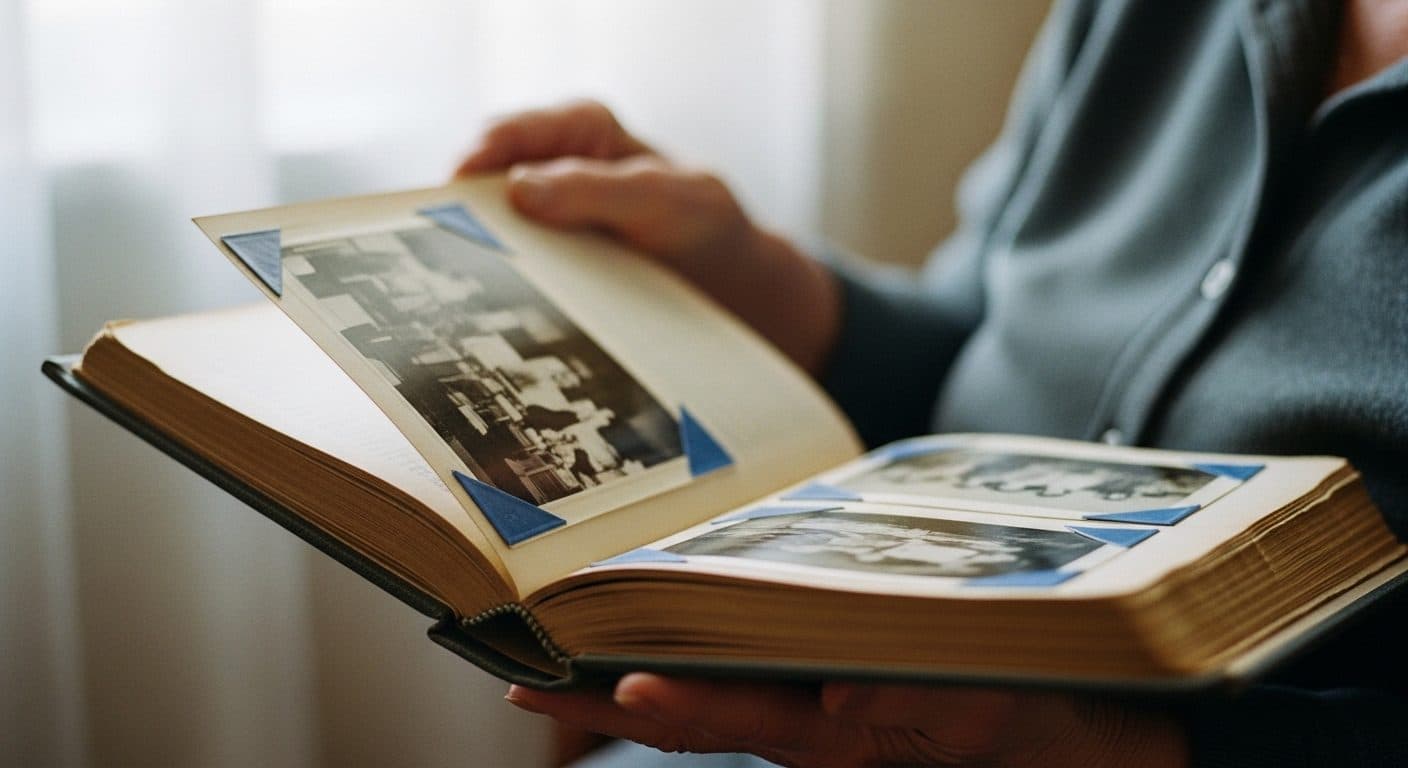
At the funeral, someone always says it: "I wish I had asked her about that." About the village she left at nineteen. About how she met your grandfather. About the year the family nearly lost everything and somehow did not. The stories were right there, available for the asking, for decades. And then they were not.
It happens because we assume there will be more time. We assume the people who hold these stories will always be around to tell them again, that the account of why the family left the old country will be available on demand. Human memory is fragile, and a story that is never recorded thins out with every retelling until one day no one can tell it at all.
This guide is part call to action, part practical manual. It covers why urgency matters, how to conduct family interviews that actually produce stories, what tools to use for recording and preservation, and how to build a living family archive that keeps growing across generations.
The Urgency: Why You Should Start Today
The math of family story loss is stark. Consider a typical family with living members across three generations.
The oldest generation (grandparents, great-aunts, great-uncles) holds 60 to 80 years of direct experience, plus another 20 to 40 years of stories inherited from their own parents. This generation is typically in their 70s, 80s, or 90s. Every year, some of these story-holders pass away, and some of those still living experience cognitive decline that makes storytelling harder.
The middle generation (parents, aunts, uncles) holds partial versions of the oldest generation's stories, heard secondhand and often remembered incompletely. They also hold their own stories, which they often assume are not interesting enough to record.
The youngest generation (you, your siblings, your cousins) holds fragments: the stories that were repeated most often or that left the strongest impression. For many in this generation, the oldest generation's experience already exists only as secondhand accounts.
The window for capturing first-person accounts from the oldest generation is narrowing, and it does not reopen. Every month of delay raises the odds that an irreplaceable story is lost. If you take one action after reading this guide, let it be scheduling a conversation with the oldest person in your family. To understand what those first-person accounts can reveal that records and DNA tests cannot, see who were your ancestors, really.
Interview Techniques That Actually Work
The difference between a forgettable interview and a treasure trove of family stories usually comes down to technique. Here is what works, drawn from oral history practice and a lot of trial and error.
Create the Right Environment
Choose a familiar, comfortable space. Your grandparent's kitchen or living room will produce better stories than a formal setting. People tell stories more naturally in places where they feel at home.
Make it a conversation, not an interview. The moment someone feels "interviewed," they stiffen and start giving short, factual answers instead of rich, narrative ones. Sit together naturally. Share a meal or a cup of tea. Let the recording be secondary to the connection.
Bring props. Old photos, family documents, heirlooms, or even food from the family's tradition can trigger stories that direct questions cannot reach. A photo of a childhood home can unlock 30 minutes of vivid storytelling that "Tell me about your childhood" never would.
Ask the Right Questions
The best interview questions are open-ended, specific enough to give a starting point, and emotionally inviting. Avoid anything that can be answered with a single fact.
Instead of "Where did you grow up?" ask "Can you walk me through a typical day in the house you grew up in? What did it smell like? What sounds did you hear?"
Instead of "When did you get married?" ask "Tell me about the day you met the person you married. Where were you? What were you wearing? What was your first impression?"
Instead of "Was life hard during the war?" ask "Tell me about one specific day during the war that you have never forgotten. What happened?"
The principle is to ask for scenes rather than summaries. Summaries are abstract and forgettable. Scenes are vivid and preservable.
Master the Follow-Up
The most valuable content often comes not from your prepared questions but from following up on what the storyteller says spontaneously. When your grandmother mentions something in passing, "That was the year the factory closed," do not move to the next question. Pause. Ask: "Tell me about the day the factory closed. What happened to the family?"
Powerful follow-up phrases include:
- "Tell me more about that."
- "What was that like for you?"
- "What happened next?"
- "How did that make you feel at the time?"
- "What do you think about that now, looking back?"
Handle Silence and Emotion Gracefully
When a story touches something deep, the storyteller may pause, tear up, or fall silent. Do not rush to fill the silence. Do not change the subject. Let the moment breathe. Often the most meaningful parts of a recording come right after a silence, when the storyteller gathers themselves and says something they have never said out loud before.
If the emotion becomes too intense and the person wants to stop, respect that boundary completely. You can always return to the topic another time. The relationship matters more than the recording.
Recording Methods: What to Use
Eternem's Voice-to-Capsule
Eternem offers the most complete solution for recording family stories because it folds several steps into one: high-fidelity voice recording, AI transcription, AI enhancement (turning raw speech into polished narrative while preserving the speaker's own voice), and secure storage in an encrypted capsule. The original audio is always kept alongside the enhanced text, so you get both the emotional authenticity of the spoken word and the readability of written prose.
The time-locking feature adds a dimension that matters for family stories. A grandparent can record a story and seal it as a time-locked capsule, set to open for a grandchild at a future milestone. A simple recording becomes a gift sent from the past to the future. The same idea works in reverse, too: you can leave messages your descendants will actually find long after you are gone.
Eternem is free on iOS and Android.
Smartphone Voice Memos
The built-in voice recorder on any modern smartphone captures adequate audio for family stories. The advantage is zero setup and zero cost. The disadvantage is that the recordings need manual organization, they are not transcribed (so they are not searchable), and they live on your device with no encryption or long-term storage strategy. As a starting point when you have nothing else handy, smartphone voice memos are infinitely better than not recording at all.
Video Recording
Video adds the visual layer: facial expressions, gestures, the physical room. For many families, seeing their grandmother's face as she tells a story matters as much as hearing the words. Use a smartphone or tablet propped up at eye level. Natural light from a window produces the most flattering image. Keep the camera steady with a tripod or something stable, and let the storyteller forget it is there.
StoryWorth
StoryWorth takes a different approach, sending weekly email prompts to a family member who responds with written stories. After a year, the responses are compiled into a physical book. It is a good option for relatives comfortable with writing and email, and it produces a beautiful tangible artifact. The limitation is that it captures only written text (no audio or video), requires consistent participation over many months, and does not support real-time conversation, which often produces richer stories than written answers to prompts. For a closer side-by-side, see our Eternem vs StoryWorth comparison.
What Questions to Ask
Beyond the general techniques above, here are specific question categories designed to capture the full breadth of a family member's experience.
The Sensory World
- What was the first house you remember living in? Describe it: the rooms, the smells, the light.
- What did your family eat for dinner on a typical weeknight? Who cooked it?
- What sounds do you associate with your childhood? A church bell? A factory whistle? Siblings fighting?
- Is there a smell that instantly takes you back to a specific moment? What is it?
Relationships and People
- Who was the person who most influenced who you became? How?
- Tell me about a friendship from your youth that shaped you.
- What did your parents disagree about? How did they resolve it?
- Was there a family member everyone talked about but nobody talked to? Why?
Turning Points
- Was there a single day that changed the direction of your life? What happened?
- What is the hardest decision you have ever made? Would you make the same choice today?
- Tell me about a time you failed at something important. What did you learn?
- What is something that happened to you that you never thought you would survive, but you did?
Wisdom and Reflection
- What do you know now that you wish you had known at 20?
- What do you want your grandchildren to understand about the world you grew up in?
- What family tradition do you hope will continue long after you are gone?
- If you could go back and relive one day from your life, which would it be?
Creating a Family Circle for Collaborative Preservation
The most resilient family archives are collaborative. When several family members contribute, the archive becomes richer, more complete, and more sustainable than anything one person could build alone.
Eternem Circles are designed for exactly this. Here is how to set up and maintain a family Circle for story preservation:
Start the Circle. Create an Eternem Circle and name it something your family will recognize: your family name, your grandmother's maiden name, or a phrase that carries your family's story. Add a description that explains the purpose, such as "This is where we collect and preserve our family's stories for future generations."
Invite broadly. Include family members across generations and branches. You want the widest possible range of perspectives. Even young children can contribute voice recordings with a parent's help.
Seed the archive. Before inviting everyone, add a few entries yourself: a recording of a family story you know, some digitized old photos, a written memory. An empty archive is intimidating; one that already has content invites contribution.
Create recurring prompts. Once a month, post a question or theme in the Circle: "Share your earliest memory of Grandpa Joe." "What is a recipe from our family that you remember?" "Tell the story of how you got your name." These prompts lower the barrier to contribution and keep the archive growing.
Celebrate contributions. When someone adds a story, acknowledge it. Ask follow-up questions. Say how the story made you feel. That social reinforcement is what keeps people coming back.
Use time-locking for legacy messages. Encourage older family members to create time-locked capsules within the Circle: messages to future family members, stories sealed for a specific date, wisdom intended for a grandchild who is not yet old enough to appreciate it. These time-locked contributions create the strongest connections across generations.
Preserving Stories for Future Generations
The real goal of family story preservation is not just capturing stories for people alive today, but making sure they reach people who are not yet born. That requires thinking about preservation differently than simple recording.
Multiple formats. Store stories in both text and audio (or video) when you can. Text is the most durable and searchable format, but audio preserves vocal quality, accent, and emotional nuance that text cannot carry.
Context and metadata. A recording without context loses meaning over time. Always note who is speaking, when and where the conversation happened, what prompted the story, and who the people mentioned in it are. What seems obvious now will be a mystery to a descendant in 50 years.
Encrypted, cloud-based storage. Physical media (hard drives, USB sticks, printed photos) degrades and gets lost. Cloud storage with encryption (Eternem uses AES-256-GCM) provides both durability and security. Your family's most private stories deserve protection from everyone outside the family, indefinitely.
Time-locked capsules for future milestones. One of the most powerful uses of time-locking is creating capsules that open at future family events: the next major reunion, a grandchild's milestone birthday, the anniversary of an immigration. These create moments of intergenerational connection no other medium can produce.
For a broader view of how technology connects families across generations, see our pillar guide to connecting generations, and if you are also tracing names and dates, our guide to how to research family history.
Frequently Asked Questions
What if my elderly relative does not want to be recorded?
Respect their wishes absolutely. Some people are uncomfortable with recording devices. You can take notes instead, write up the stories from memory right after the conversation, or simply listen and enjoy the moment. If they are open to it, try starting with photos rather than formal recording. Looking at old photos together often produces natural storytelling that feels far less intimidating than being "recorded."
How do I handle conflicting versions of the same family story?
Preserve all of them. Different family members remember events differently, and each version reveals something true about the teller's perspective. Conflicting accounts are a feature of a family archive, not a bug. They show how the same events were lived differently by different people, which is often more honest than a single tidy version everyone agrees to repeat.
Is it worth preserving "boring" everyday stories?
Yes. The stories that seem mundane today become fascinating with time. What your grandmother ate for breakfast, how she got to school, what her daily routine looked like: these details paint a picture of a vanished world that descendants will find captivating. Social historians consistently find that everyday accounts can be more historically valuable than the dramatic ones.
How do I digitize old photos and documents?
For basic digitizing, a smartphone camera in good light produces surprisingly good results. For higher quality, use a flatbed scanner at 300 DPI or above. Free apps like Google PhotoScan reduce glare. For irreplaceable items, consider a professional scanning service. Once digitized, add the photos to your family archive with captions identifying the people, place, and approximate date.
What if my family is scattered across the world?
Geographic distance makes family archiving harder to do in person but no less important. Use video calls to conduct interviews remotely. Share a collaborative platform, like an Eternem Circle, where relatives on different continents can contribute. Send recording prompts by email or family group chat. Distance is a barrier to spontaneous storytelling, but not to intentional preservation.